Opening a Restaurant: Licences, Permits and Registrations
November 12, 2026
The licences needed to open a restaurant in the UK are a food business registration with your local council, a premises licence if you sell alcohol or serve hot food late at night, the right planning use class, a written fire risk assessment and a music licence. Employing staff adds employer registrations and compulsory insurance.
None of these is especially difficult on its own. What catches new restaurateurs out is timing. A premises licence needs a 28-day consultation, food registration must be done at least 28 days before you trade, and a planning issue discovered after you have signed a lease can stall everything. Work backwards from your opening date and most of the stress disappears.
This guide focuses on England, with short notes where Scotland, Wales and Northern Ireland differ. Rules change, so check each step with your local council before you rely on it. Fit-out and start-up costs are a separate topic; here we stick to the paperwork.
First Decision: Will You Sell Alcohol or Open Late?
The single biggest factor in how long your paperwork takes is the Licensing Act 2003. You need a premises licence from your council if you plan to:
- Sell alcohol: Any alcohol sale, including a glass of wine with dinner, is a licensable activity.
- Serve late-night refreshment: Hot food or hot drinks served to the public between 23:00 and 05:00.
- Provide regulated entertainment: Some live music, films or performances, depending on audience size and time of day.
If you sell alcohol, the premises licence must name a Designated Premises Supervisor (DPS), who must hold a personal licence. A personal licence requires an accredited qualification and a criminal record check, so if nobody on your team has one, start this early. A café that closes at 18:00 and serves no alcohol may not need a premises licence at all.
Restaurant Licences and Registrations, Step by Step
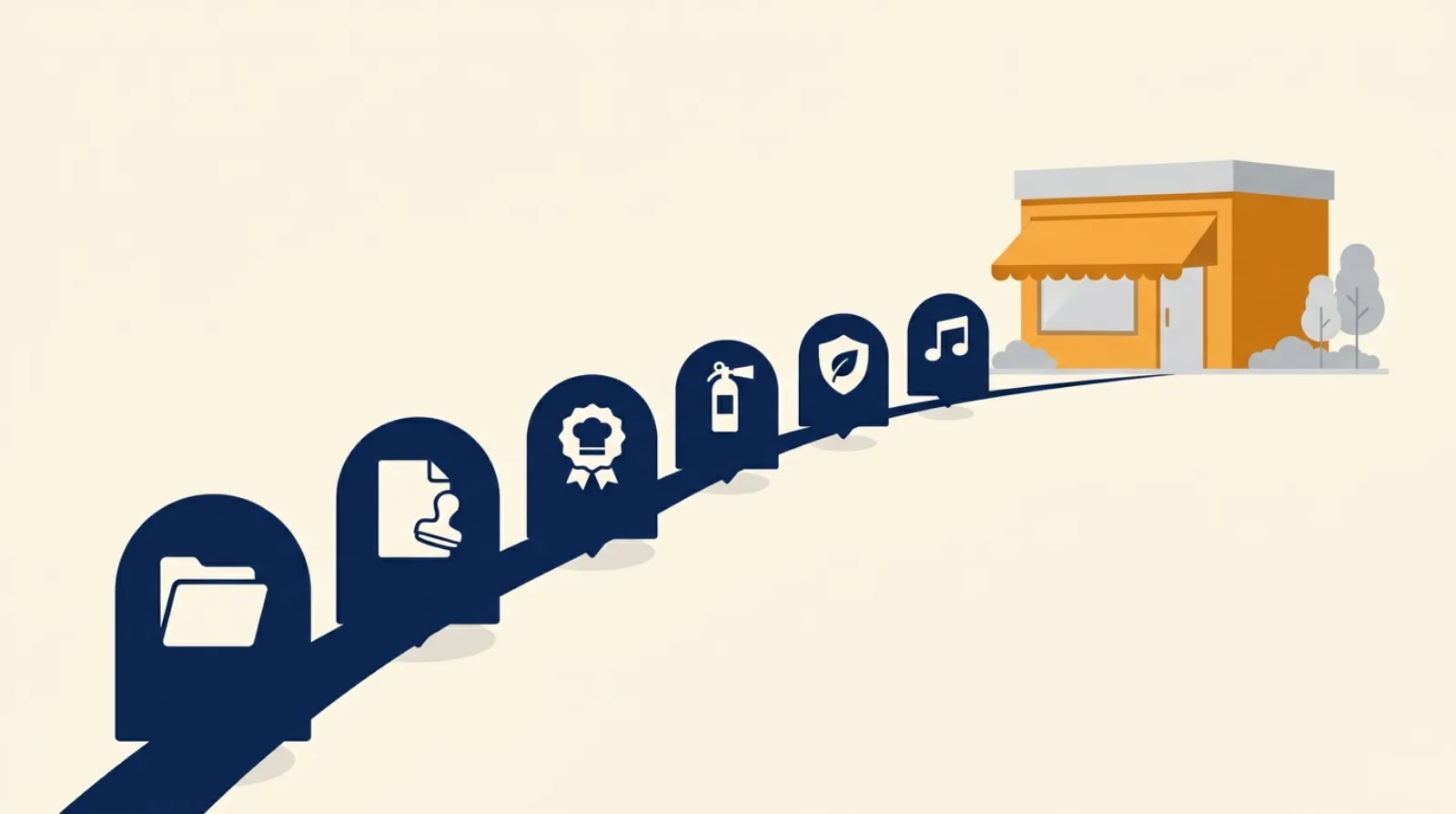
The order below follows the dependencies between steps. Several can run in parallel, but anything that depends on your premises should wait until you know the premises are suitable.
1. Business Structure and HMRC
Decide whether you will trade as a sole trader or a limited company. Incorporating a limited company online at Companies House has cost £100 since February 2026. Sole traders register with HMRC for Self Assessment instead. Since April 2026, sole traders with qualifying income over £50,000 must also keep digital records and send quarterly updates under Making Tax Digital for Income Tax, with the threshold falling to £30,000 in April 2027. VAT registration becomes compulsory once your taxable turnover passes £90,000. Talk to an accountant before you choose.
2. Planning and Use Class
Since September 2020, restaurants and cafés fall under Use Class E, which also covers shops and offices. Moving into a former shop usually needs no change-of-use permission. Hot food takeaways and pubs, however, are “sui generis” and need planning permission. Check the planning history of the unit, and any conditions on opening hours or extraction, before you sign the lease. Building work, a new extraction system or illuminated signs may need separate approval.
3. Premises Licence and Personal Licence
Apply to your council’s licensing team. You must display a blue notice at the premises for 28 days and publish a notice in a local newspaper. If nobody objects during the consultation, the licence is granted; objections lead to a hearing. The application fee depends on the rateable value of the premises and ranges from £100 to £635, with an annual fee on top. For one-off events, a Temporary Event Notice covers up to 499 people.
4. Food Business Registration
Every food business must register with its local council at least 28 days before it starts trading. Registration is free, cannot be refused, and is done online through the government’s food business registration service. Each site is registered separately. In Scotland, registration goes through Food Standards Scotland’s process instead.
5. Food Safety, Hygiene Training and Allergens
You need a food safety management system based on HACCP principles. Many restaurants use the Food Standards Agency’s Safer Food, Better Business pack. There is no legal requirement for a food hygiene certificate, but staff must be trained or supervised in line with their role, and owners and managers need suitable training. Your local authority will inspect you and give you a food hygiene rating. Displaying it is mandatory in Wales and Northern Ireland and voluntary in England, although the FSA has proposed making display mandatory in England too.
For allergens, the 14 major allergens must be declared for every dish. Since March 2025, the FSA’s best-practice guidance recommends written allergen information for non-prepacked food, backed up by staff conversations with customers.
6. Fire Risk Assessment
As the “responsible person”, you must carry out a fire risk assessment under the Regulatory Reform (Fire Safety) Order 2005. Since October 2023, every business must record the full assessment in writing, together with the name of whoever carried it out. Kitchens with deep fryers and extraction systems deserve particular attention.
7. Music Licence
Playing background music, the radio or live music in a restaurant usually needs TheMusicLicence from PPL PRS. This applies even to a radio playing only in the kitchen for staff.
8. Pavement Licence (If You Want Outdoor Seating)
Tables and chairs on the pavement need a pavement licence from the council. Fees are capped at £500 for a new licence and £350 for a renewal, and licences can last up to two years. Many councils charge less than the cap.
9. Employer Duties
Before your first employee starts, register as an employer with HMRC for PAYE and take out employers’ liability insurance with at least £5 million of cover. Run right-to-work checks on every new starter. Penalties now reach £45,000 per illegal worker for a first breach. Auto-enrol eligible staff into a workplace pension. Since April 2026, statutory sick pay is payable from the first day of sickness. Our guide to employee time tracking and shift management covers how to keep hours and rotas in order from day one.
A Realistic Opening Timeline
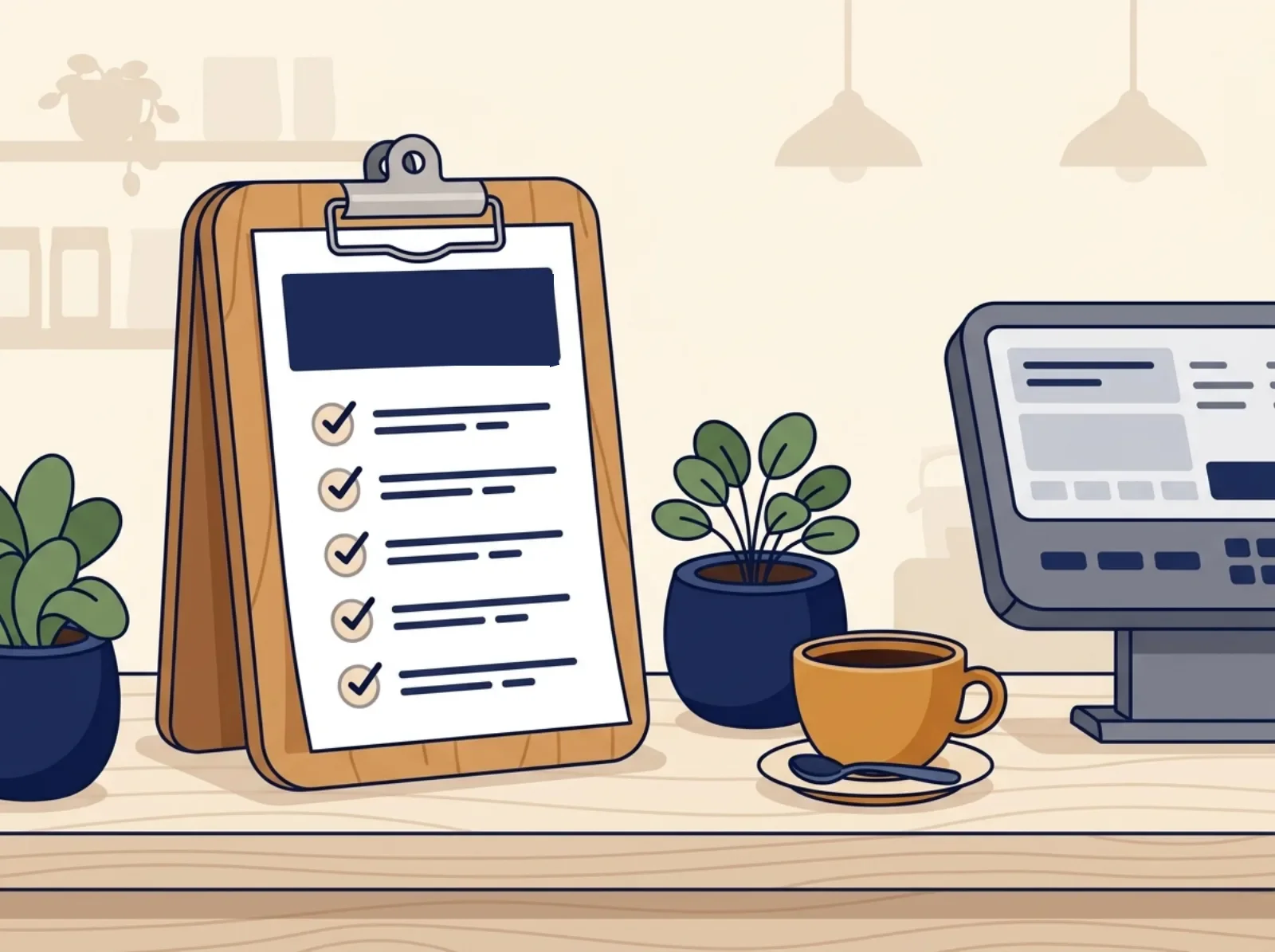
Use this as a starting point and adjust for your council’s workload:
| Weeks before opening | What to have under way |
|---|---|
| 12–16 | Business structure, accountant, planning check on the unit before signing |
| 10–12 | Personal licence course for your DPS; premises licence application submitted |
| 6–8 | Fire risk assessment, food safety system, allergen information drafted |
| 4–6 | Food business registration (at least 28 days before trading); employers’ liability insurance |
| 2–4 | PAYE registration, right-to-work checks, music licence, till and menu set-up |
| Opening week | Staff training on allergens and food safety; test service |
What Changed in 2025–2026
Several rules have changed recently, and many guides online have not caught up:
- Business rates relief ended: Retail, hospitality and leisure relief ended on 31 March 2026. From April 2026, hospitality premises pay lower dedicated multipliers instead, so check your new bill.
- Workplace recycling: Under Simpler Recycling, businesses in England with ten or more employees have had to separate dry recyclables and food waste since 31 March 2025. Smaller businesses follow from 31 March 2027.
- Tipping: All tips must already go to workers in full under the 2023 tipping law. A new duty to consult staff on your written tipping policy is expected around the start of 2027.
- Martyn’s Law: Premises that can hold 200 or more people will need public protection procedures. The duties are expected to start in spring 2027, so large restaurants should plan ahead.
Your Till and Your Records
HMRC expects accurate, complete records of every sale, and your till is where those records start. Choose a system that records each transaction with its payment method, separates VAT correctly and produces a clean end-of-day Z report you can hand to your accountant. If you will cross the Making Tax Digital threshold, make sure your sales data exports easily into MTD-compatible software. For a walkthrough of what to look for, see our guide to POS systems for restaurants and cafés.
Common Mistakes
- Signing the lease before checking planning and licensing: A unit without the right use class, or in an area with a restrictive licensing policy, can delay opening by months.
- Leaving the personal licence too late: Without a DPS who holds a personal licence, your premises licence cannot authorise alcohol sales.
- Forgetting food registration: Trading without registering is an offence. The 28-day rule means it must be done well before the soft launch.
- Keeping the fire risk assessment in your head: A verbal or partial assessment no longer meets the law. It must be fully written down.
- Treating allergens as a menu footnote: Allergen errors are among the most serious risks in a new kitchen. Train every member of staff before the first service.
Frequently Asked Questions
How long does it take to get a premises licence?
Allow at least six to eight weeks. The 28-day consultation is the minimum, and any objection leads to a hearing that adds more time. Prepare the application, plans and operating schedule carefully, because incomplete applications restart the clock.
Do I need a food hygiene certificate to open a restaurant?
No, there is no legal requirement for a specific certificate. However, staff must be trained or supervised in food hygiene in line with their role, and a recognised course is the easiest way to show an inspector that you meet this duty.
Do I need a licence to play music in my restaurant?
Yes, in almost all cases. Background music, a radio or live performers usually require TheMusicLicence from PPL PRS, even if the music is only played in the kitchen for staff.
Can I open a restaurant in a former shop without planning permission?
Usually yes. Shops, restaurants and cafés all fall under Use Class E, so a change between them generally does not need planning permission. Hot food takeaways and pubs are the exceptions, and building work or new extraction may still need separate approval.
Opening Your Restaurant with Kardo POS
Once the paperwork is done, you need a till and ordering set-up that works properly from the first service. Kardo POS is cloud-based. You can build your menu, categories and prices in the back office before you open, and any price change reaches every terminal instantly. Staff clock in by scanning a QR code, and role-based permissions mean each person only sees what their role allows. Every sale feeds your stock and end-of-day reports automatically.
If you would like to set up tables, bills, stock and end-of-day closing together before launch, you can try it with your own menu and service flow in a Kardo POS demo. Our aim is for you to spend opening night thinking about your guests, not your till.